



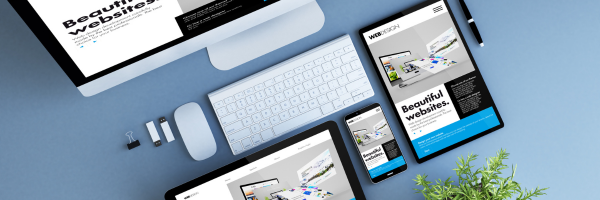
When people think about website design, they often focus on colours, animations, graphics, and visual effects. While these elements can contribute to a website’s appearance, they are rarely what determines whether a website successfully converts visitors into customers.
In reality, the best website design often feels effortless. Visitors can quickly find what they need, understand the message, and take the next step without confusion. When a website is simple, organized, and intuitive, users spend less time figuring out how the site works and more time engaging with the business itself.
Why First Impressions Matter Online
Research consistently shows that users form opinions about a website within seconds of arriving.
Before reading every word on a page, visitors are already evaluating:
- Professionalism
- Trustworthiness
- Credibility
- Ease of use
- Overall quality
A cluttered layout, confusing navigation, or overwhelming design can create doubt almost immediately.
On the other hand, a clean and organized website helps build confidence from the start.
Good Design Should Feel Invisible
One of the most interesting aspects of great website design is that people often don’t notice it.
What they do notice is when something feels difficult.
Examples include:
- Menus that are hard to navigate
- Too many competing calls to action
- Overwhelming blocks of text
- Poor mobile experiences
- Confusing page layouts
When visitors can move through a website naturally, they focus on the content and message rather than the design itself.
This is often what separates a high-performing website from one that struggles to convert traffic into leads.
Simplicity Helps Visitors Take Action
Every page on a website should have a purpose.
Whether that purpose is to:
- Generate a phone call
- Encourage a form submission
- Book a consultation
- Request a quote
- Learn about a service
Visitors should immediately understand what action they can take next. Simple website design removes unnecessary distractions and creates a clear path forward. The easier it is for visitors to understand what to do, the more likely they are to do it.
Clear Navigation Reduces Frustration
Navigation plays a major role in user experience. Visitors should never feel lost while browsing a website. Strong navigation typically includes:
- Clear menu labels
- Logical page organization
- Consistent structure
- Easy access to important information
When users cannot find answers quickly, they often leave and continue their search elsewhere. Simple navigation helps keep visitors engaged longer and increases the likelihood of conversion.
Whitespace Improves Readability
Many businesses feel the need to fill every inch of their website with information.
However, spacing is one of the most powerful design tools available.
Whitespace helps:
- Improve readability
- Highlight important content
- Reduce visual overwhelm
- Guide user attention
Rather than making a page feel empty, proper spacing makes information easier to absorb.
This is especially important as more users browse websites on mobile devices.
Mobile Users Expect Simplicity
Today, a significant portion of website traffic comes from smartphones.
Mobile users have different expectations than desktop users.
They want:
- Fast loading pages
- Simple navigation
- Easy-to-read content
- Quick access to information
Complicated designs that may work on a large monitor often become frustrating on smaller screens.
Modern website design should prioritize usability across all devices.
Trust Is Built Through Clarity
Many businesses try to impress visitors with flashy features.
However, trust is more often created through clarity.
Visitors want to know:
- What you do
- Who you help
- Why they should trust you
- How to contact you
When these answers are immediately obvious, visitors feel more comfortable moving forward.
Confusing websites often create hesitation, even when the business itself is highly qualified.
SEO and User Experience Work Together
Search engines increasingly evaluate user experience signals when determining rankings.
A well-structured website can support:
- Better engagement
- Longer time on site
- Easier navigation
- Improved content discovery
This is one reason businesses investing in professional website design services often see benefits that extend beyond aesthetics.
A properly designed website supports both visitors and search engines.
Businesses looking to improve usability, conversions, and online visibility can benefit from professional website design services that prioritize both user experience and business goals.
What Visitors Really Want
When someone lands on your website, they are usually trying to answer a question or solve a problem.
They are not looking to admire design trends.
They want to quickly understand:
- Who you are
- What you offer
- Whether you can help
- What they should do next
The easier you make this process, the more effective your website becomes.
Simplicity Creates Confidence
The strongest websites are not necessarily the most complex. They are often the easiest to use.
A clean layout, thoughtful spacing, clear navigation, and intuitive structure allow visitors to focus on what matters most. When users can easily understand your message and find the information they need, they are more likely to trust your business and take action.
According to the Nielsen Norman Group, users prefer websites that are easy to scan and navigate because they help reduce cognitive effort and improve overall usability.
The best website design does not compete for attention. It quietly supports the visitor’s journey, making every interaction feel natural, simple, and effortless.
